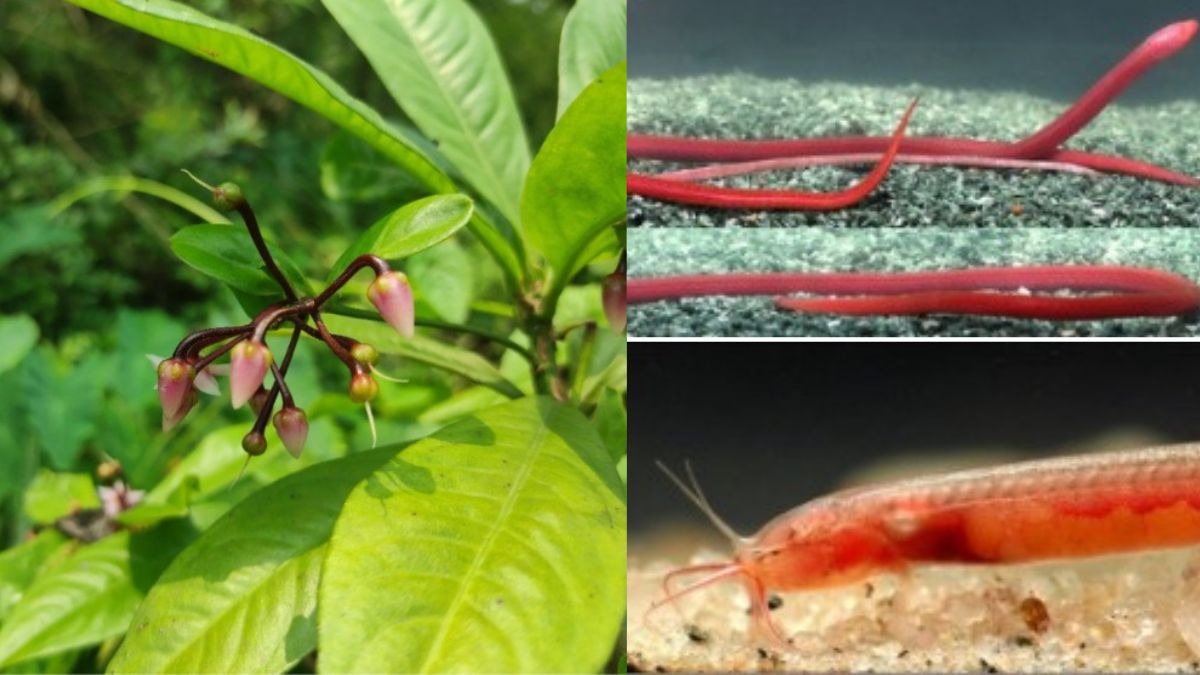
Assam Chief Minister Himanta Biswa Sarma announced the rediscovery of a shrub that had been missing for 204 years, alongside the discovery of two brand new fish species found living in village wells in Goalpara. The announcement highlights a significant moment for Indian zoology, bringing attention to unique subterranean wildlife inhabiting local water sources in the region.
The missing shrub is identified as Ardisia colorata, a member of the primrose family first described in a gardening periodical in 1821 with a native range extending from Assam to Myanmar. Meanwhile, the newly discovered fishes were found in a dug-out well in a Goalpara village. The first fish, named Gitchak nakana, is a tiny, blind, translucent red loach measuring just 20.8 millimetres, described by Ralf Britz and colleagues in Scientific Reports on February 26. Its name combines Garo words for red, fish, and blind. The second animal, Rakthamichthys anchi, is a snake-like swamp eel described by researchers in Zootaxa on July 30 from wells in the same village.
Both newly found fishes are phreatobitic organisms, meaning they inhabit underground aquifers consisting of silt and sand. Researchers note that fewer than 10 per cent of known subterranean fishes come from such aquifer environments, which serve as dynamic habitats. To protect the newly identified species, authors of the Scientific Reports paper chose not to publish the specific name of the village. The discovery serves as a reminder of the hidden biodiversity existing in underground water layers and forests, prompting calls to protect these natural habitats.
Comments (0)