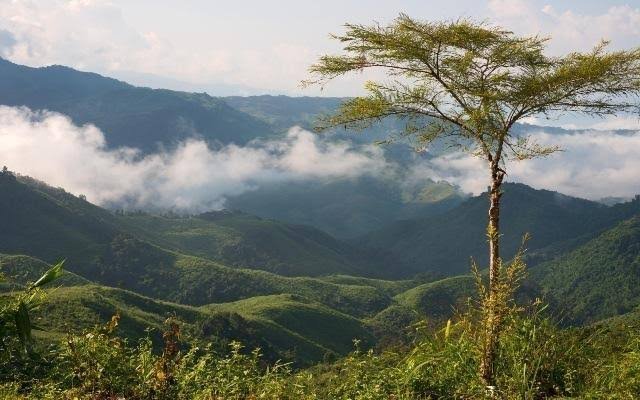
Nagaland is a beautiful state in northeastern India, known for its rich tribal heritage, breathtaking landscapes, and vibrant traditions. It shares its borders with Arunachal Pradesh to the north, Assam to the west, Manipur to the south, and Myanmar's Naga Self-Administered Zone to the east. The capital of Nagaland is Kohima, while the largest urban area is the twin cities of Chümoukedima and Dimapur. Covering an area of about 16,579 square kilometers, the state had a population of nearly 2 million according to the 2011 Census, making it one of the least populated states in India.
Nagaland is divided into 17 administrative districts and is home to 17 major Naga tribes, along with several sub-tribes. Each tribe has its own unique language, customs, traditional attire, and cultural practices. The state's rich heritage is reflected in its folklore, songs, dances, and stories, many of which have been passed down orally through generations. Historical records of the Naga people date back to the 13th century.
During the 19th century, British India gradually extended its control over the Naga Hills. After India gained independence in 1947, debates arose over the political future of the region. At that time, the Naga Hills formed part of the state of Assam. The Naga National Council, led by Zapu Phizo, sought an independent Naga nation, leading to a prolonged armed insurgency. The Government of India maintained that the region was an integral part of the country. Eventually, Nagaland was officially established as the 16th state of India on 1 December 1963, and its first democratically elected government took office in 1964.
Today, Nagaland is admired for its scenic mountains, rich biodiversity, and cultural diversity. One of its most famous attractions is the stunning Dzüko Valley, located near Viswema in the southern part of the state. The economy is largely based on agriculture, which remains an important source of livelihood for many people. Other key sectors include forestry, tourism, horticulture, real estate, insurance, and small-scale cottage industries. The state is also believed to have valuable natural resources such as petroleum, minerals, and hydropower, offering significant potential for future economic development.
Comments (0)